Campervan Conversion Lining and Insulation (Updated April 2026) Insulation is an important factor, I'm using a mixture of PIR sheet, Mineral Wool and Dodo Thermal Liner Pro, which ever best suits the location, as no one type suits all. 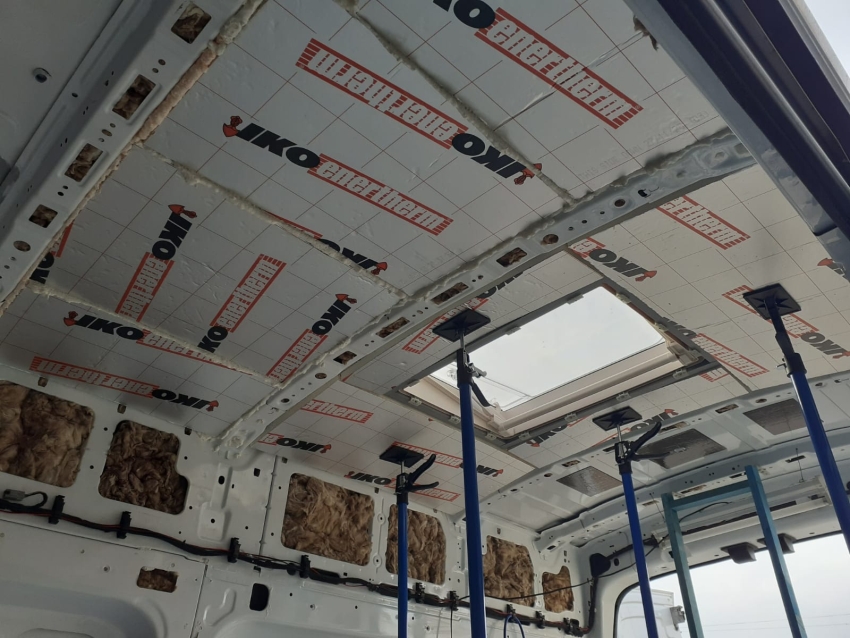 I tiled the ceiling with 25mm PIR sheet and filled the gaps between pieces with PU foam. 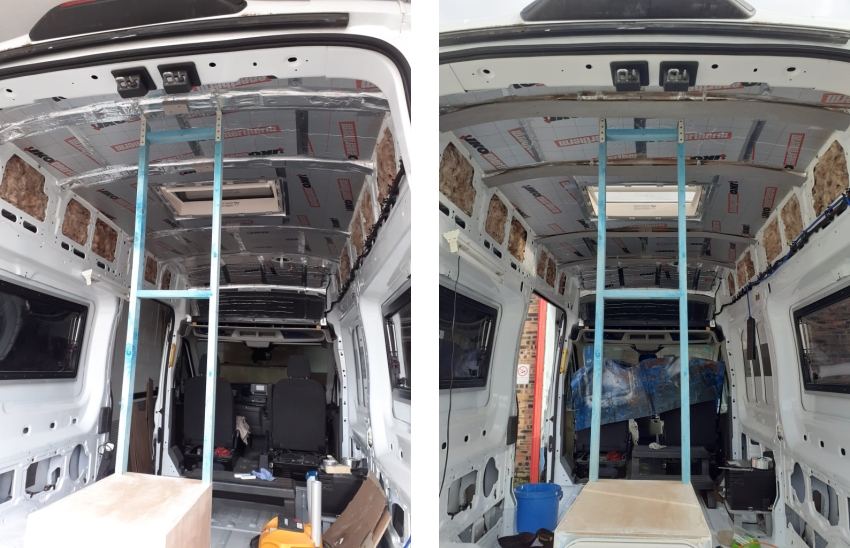 The surplus foam was trimmed with a hacksaw blade and the joints covered with Aluminium tape. The top pockets in the side walls were lightly stuffed with Mineral Wool and the front slope above the Cab was covered in 10mm Dodo. The five cross beams on the roof are a fairly irregular shape.These were filled with Mineral Wool, taped, then a 100mm strip of painted 5mm ply was bent across each. I used spacers to hold the required shape and screwed it all into position. These strips give a uniform, flat section in the middle and run out with an even curve at the sides. The plastic ceiling lats will be glued to these strips with Sikaflex. I started laying the ceiling lats, hollow plastic soffit board, which is super light weight. With the minimal support structure I used and PIR insulation sheets, there's not much weight up top. 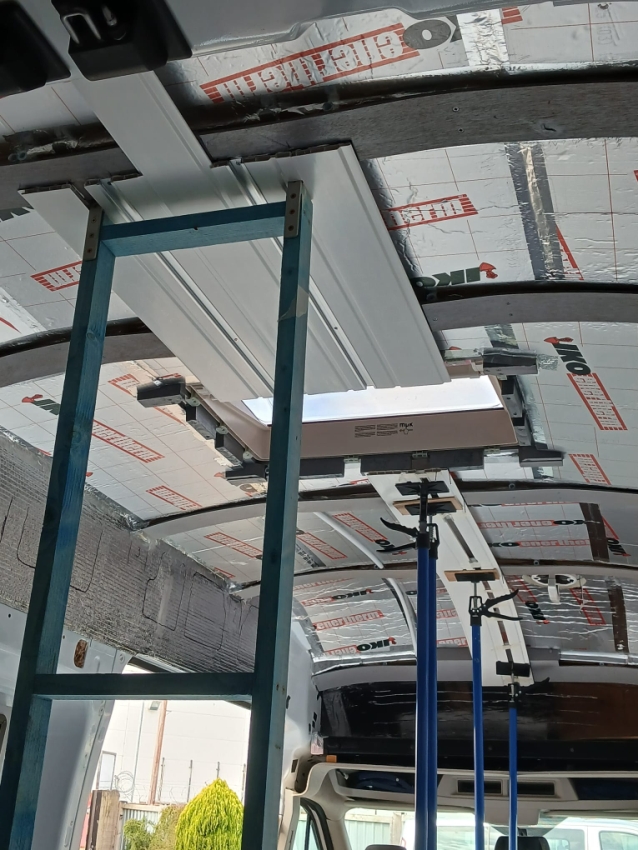 The embedded LED track is installed at the same time, I had to make several cuts in its spine to allow it to form the curve at the front of the vans roof. The plastic boards are only 100mm wide x 9mm thick and hollow, apart from four bracing ribs. These bend fairly easily and is the reason I chose them over the 300mm wide variant. They will also adopt the curve either side of the roof more easily. Soffit boards from eurocell. 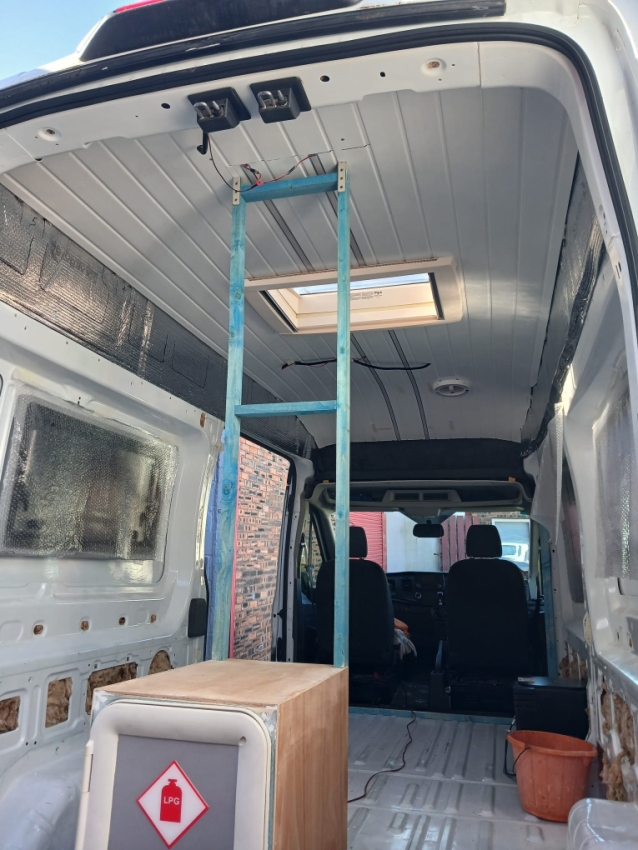 That's the ceiling completed and the blind/trim fitted to the skylight. 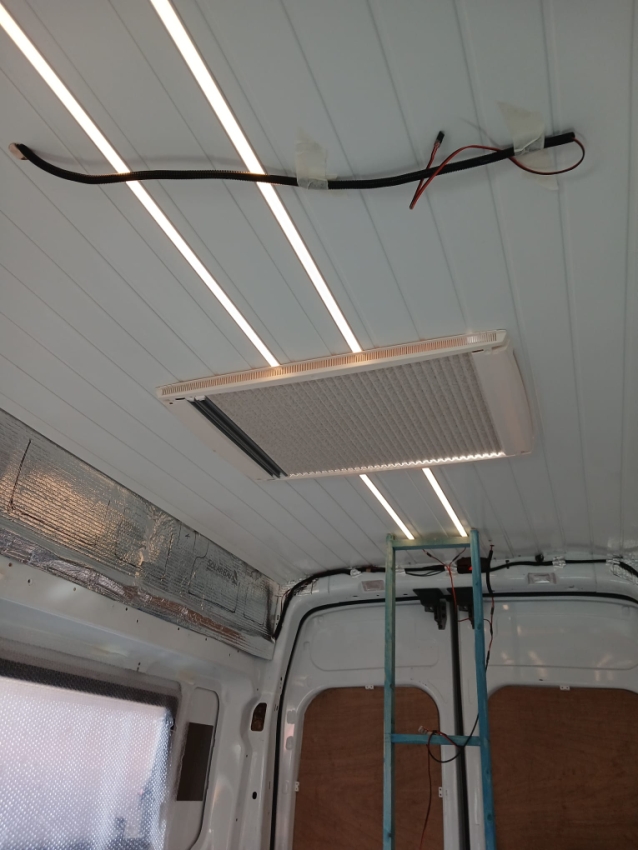 Main LED lighting tracks fitted and tested. 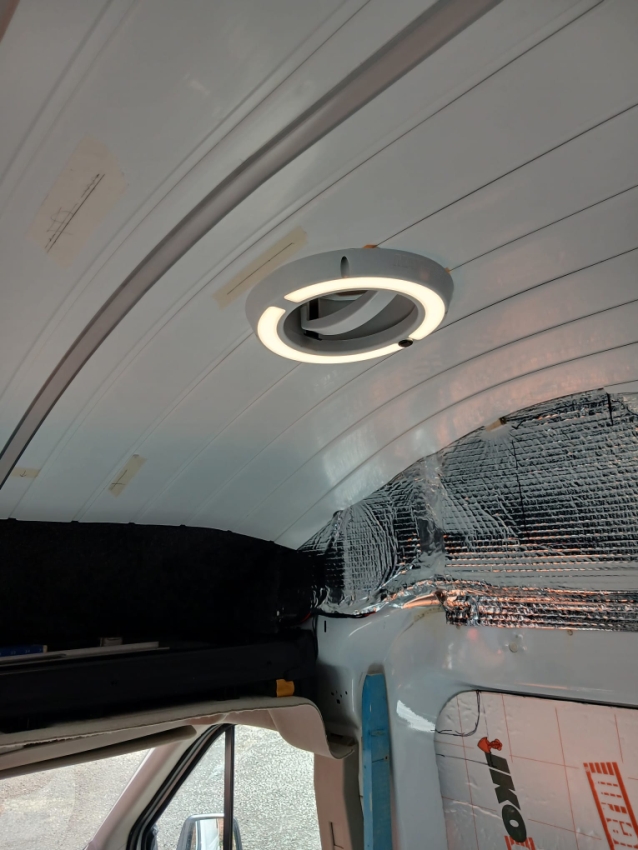 Bathroom Fan/Light tested. 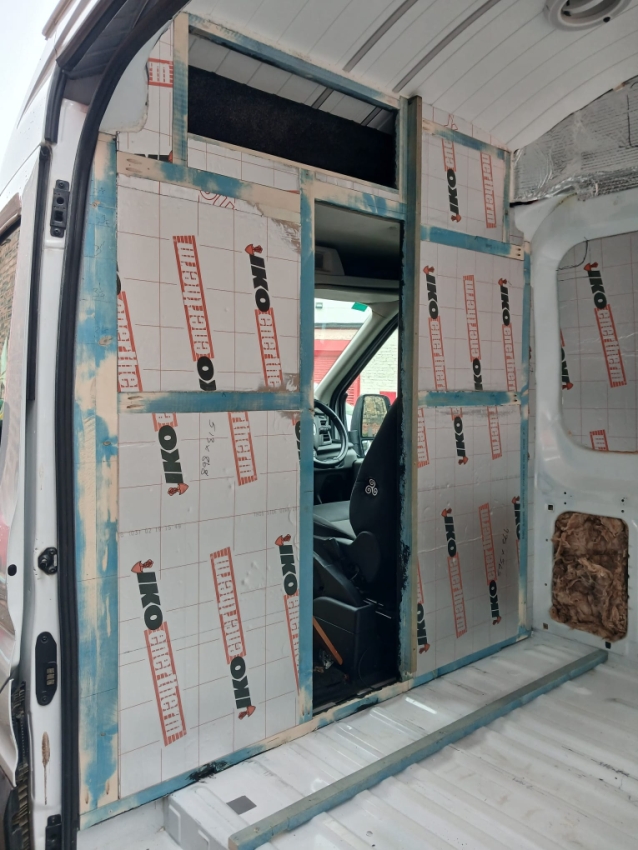 I constructed an insulated bulkhead. The door into the cab will be made in a similar way. This keeps the living space nice and warm and removes the need for either internal or external covers on the cab windows. This is handy for a fast get away, if there is trouble round your van. The overhead locker is insulated with 10mm Dodo thermal liner and then carpeted. The locker door will have 10mm Dodo applied to the inner face. The cab side of the bulkhead is painted satin Black, to reduce reflections on the windscreen. 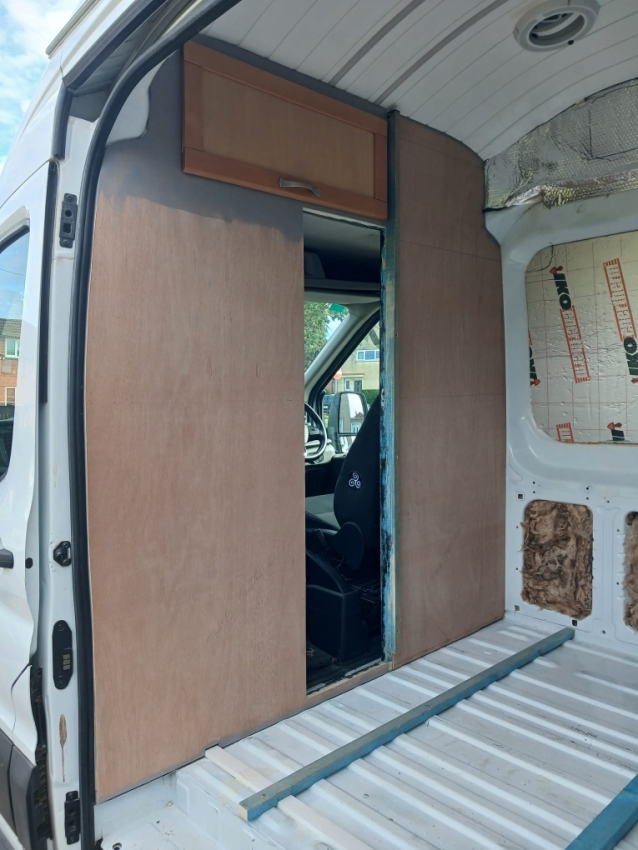 Thats the bulkhead skinned and the locker door fitted. Time to move on to the Shower Room. 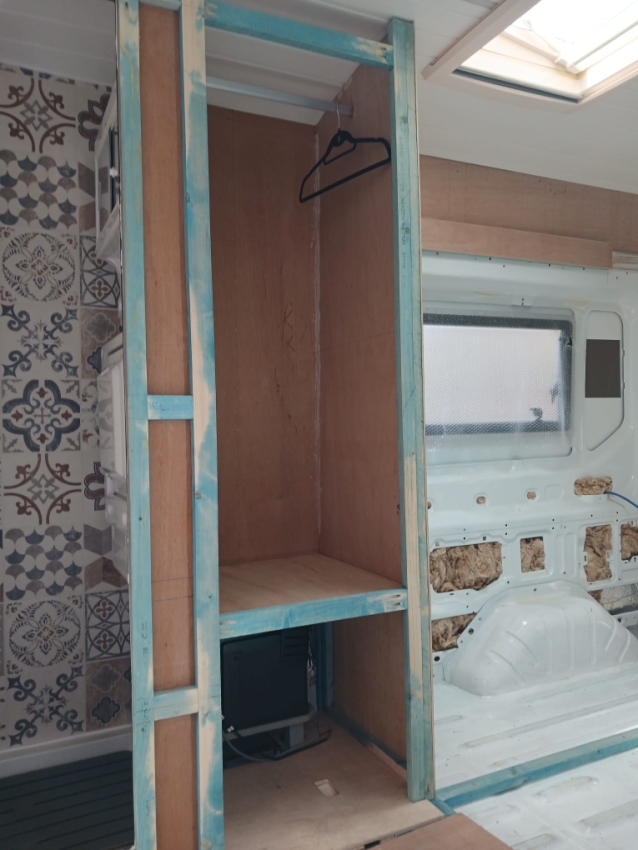 Shower room and wardrobe, virtually completed. The bottom lifts out of the wardrobe, to access the Truma Water Heater. 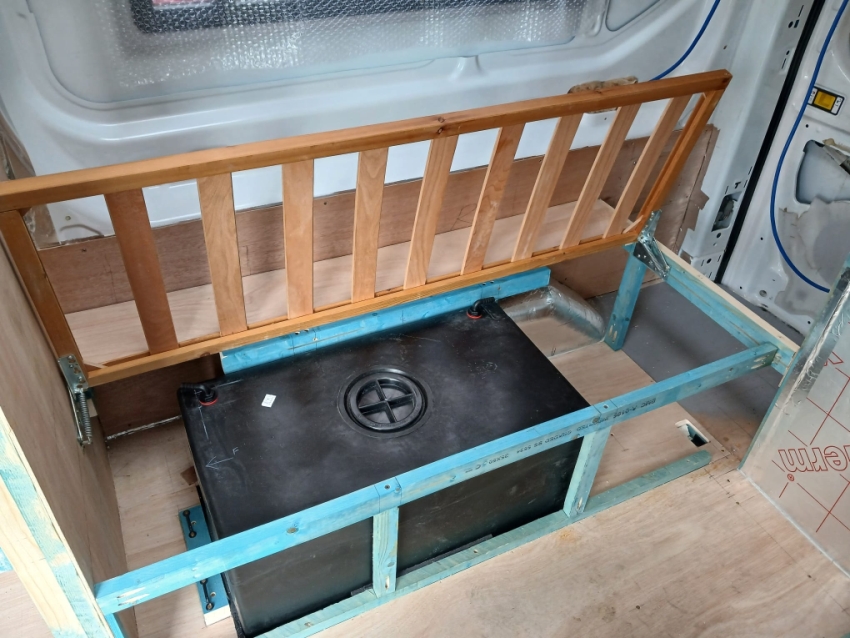 Constructed part of one bed, the water tank is removable through the hinged base. To keep build costs down I purchased the bed bases and cushions from a caravan dismantler. I'm concentrating my efforts on one side of the van, this allows me to use the other side when collecting long lengths of timber or 8 x 4 sheets of ply. 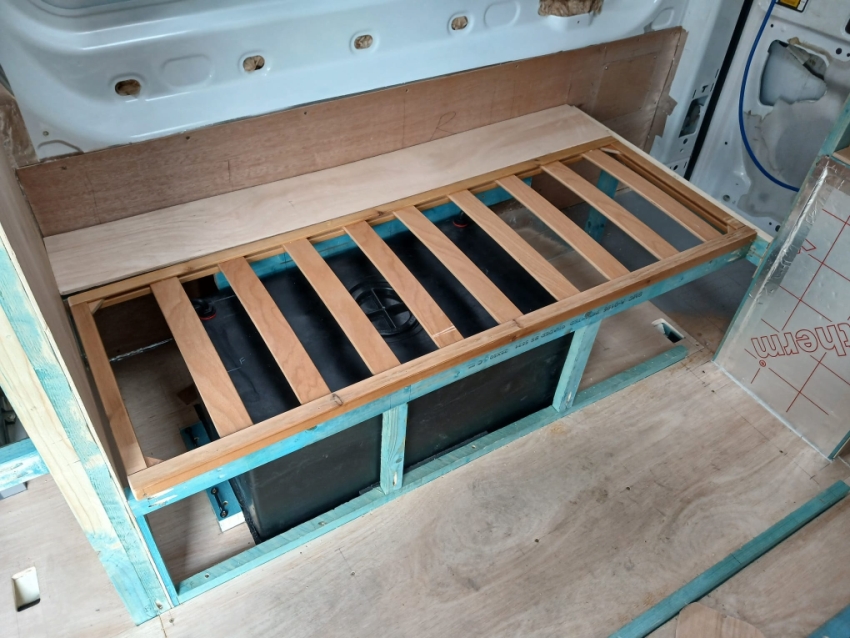 The end section still needs construction, feet will go into a tunnel that protrudes into the garage area. The idea is, you simply roll up your bedding into the tunnel and use a cargo net etc to keep it located while traveling. 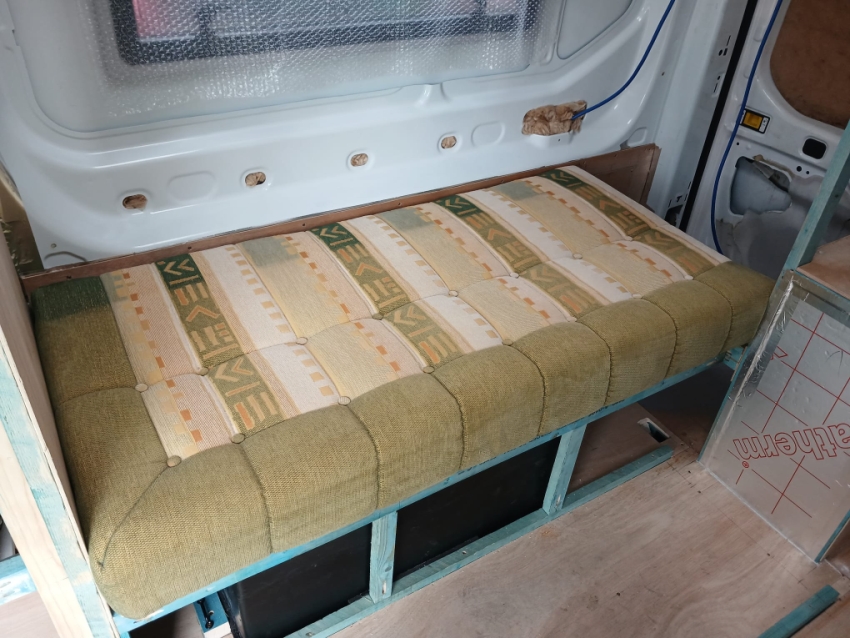 It will be a decent size pair of beds, 1900mm(6' 3") x 680mm 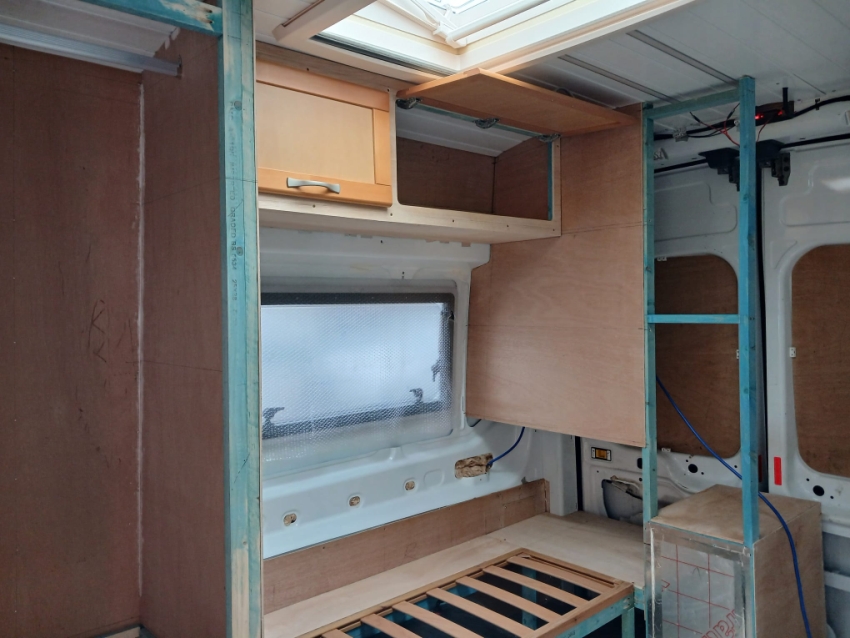 Got on with the lockers, again doors/hinges from the caravan breakers, to keep costs down. 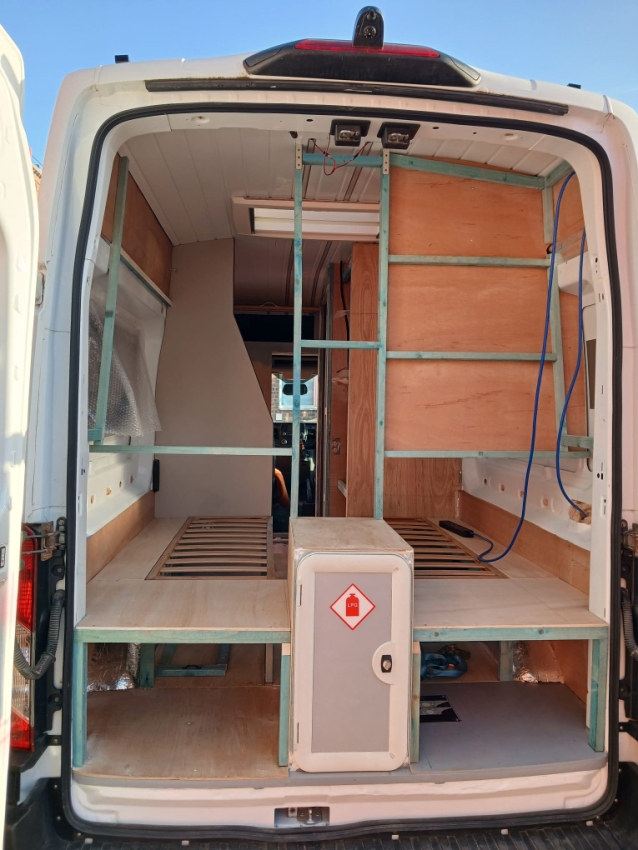 Got the bed base installed on the left side. Starting to look like a campervan. To be continued.......... |
 |
 |