TEAC VRDS CD Mechanism May 2024 The TEAC VRDS CD Mechanism is legendary, but it turns out not all VRDS models are equal, for from it. There follows a basic description and break down of the different types of VRDS Mechanism and the models that used them. Its not definitive, there are far to many variations, but it's a good basic guide. TEAC produced models under their own brand name and from sister companies ESOTERIC for high end models and TASCAM for Pro Audio models. They also sold the VRDS assembly to manufacturers such as WADIA and SPECTRAL, who used the VRDS assembly both as supplied, or in modified form. I've always lusted after a VRDS based CD Transport and this is part of my research and decision making process, for choosing which model/s to look out for. So what does VRDS, stand for? Vibration-free Rigid Disc-clamping System It was used and gained its reputation, on a whole range of classic TEAC GROUP, CD players and transports produced during the 1990's. A disc clamps the CD down onto the spindle hub, to reduce vibration, this system is well regarded even today. While the basic mechanism on some of the classic VRDS models is still relevant, the DAC's fitted at the time can easily be bettered by modern versions. So removing or bypassing the DAC in one of these CD players, can leave you with a very good CD Transport. There were also several Transport only models produced at the time. All of these early VRDS variants can be upgraded by re-clocking, improving power supplies etc and easily brought up to a level, comparable with quite expensive current models. So they make a good donor for DIY projects. I won't do this chronologically, but rather order the variants by build quality, starting with the budget models. TEAC used CMK X.X naming convention for the earlier VRDS variants and the lower the number, the better the construction. VRDS CMK-4 I wouldn't recommend any machine using this version of VRDS ! It's by far the cheapest variant, built down to a price, using inferior design/parts, yet some expensive and well reviewed models used it, Wadia and Esoteric models for instance. Here it is in the TEAC VRDS T1 Transport. 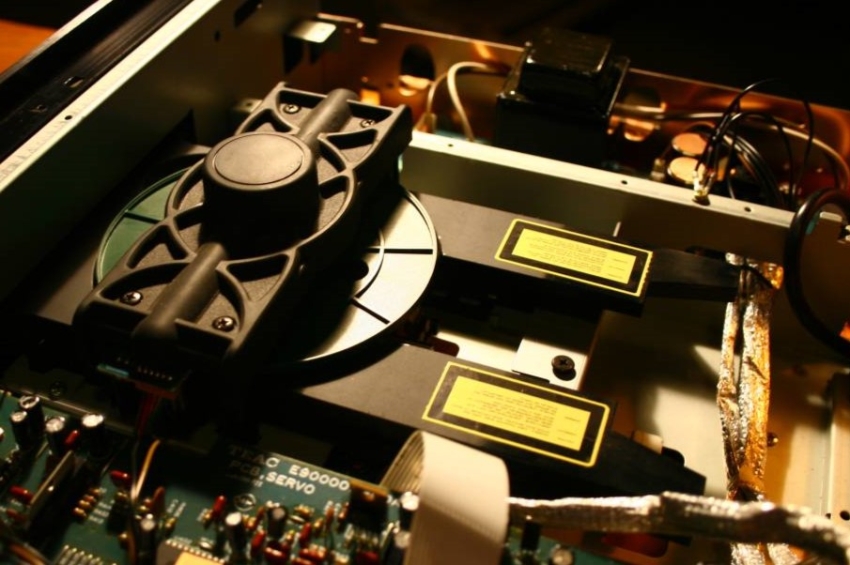 At first glance it looks like some of the mid range VRDS mechanisms, but don't be deceived. The bridge supporting the motor/bearing/clamp is not what it first appears. 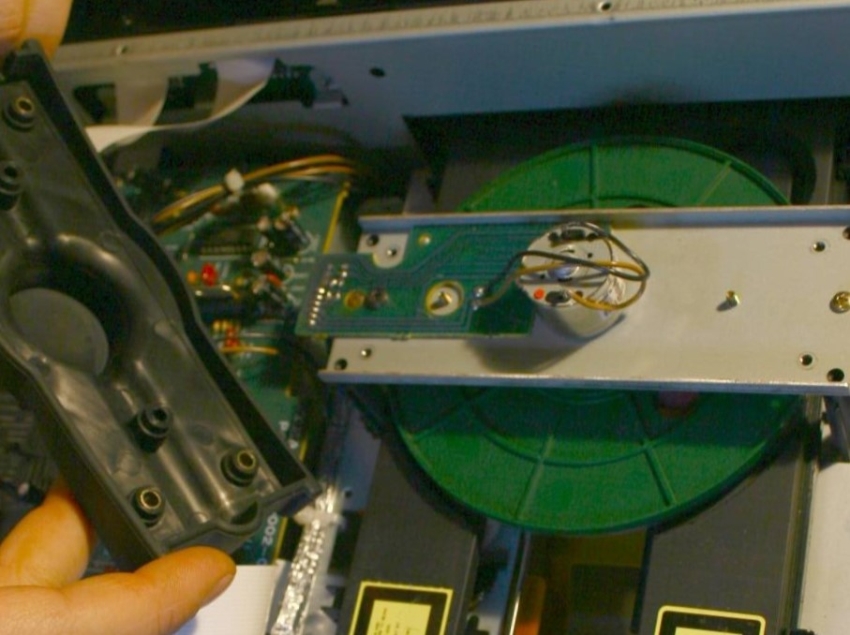 If you remove the purely cosmetic plastic cover, underneath there is a "Zintec" folded steel bridge, housing a cheap brush motor. The whole clamping and rotation mechanism is hung off the motors tiny plain bearings and puny shaft. The Green clamping disc is made of plastic and the Laser assembly is the not so special Sony KSS-240A. Some models, like the TEAC P-500 Transport, shown below, didn't even hide the inferior parts and omitted the cosmetic plastic cover altogether. This is very basic construction and really nothing special at all. 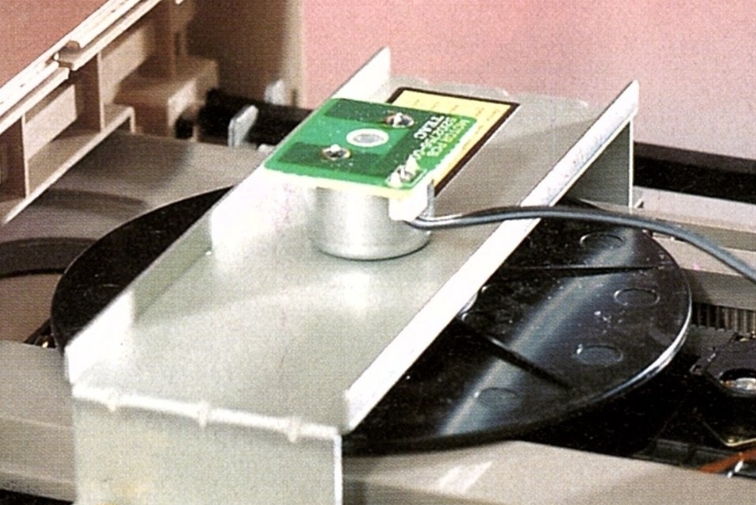 There were variants of the CMK-4 assembly: VRDS 8 Player used CMK-4.5 VRDS 9 Player used CMK-4.2 The thin steel bridge was a different shape on these and they used a different laser, but the construction was of a similar basic quality. So, the models using the CMK-4 variants and which, in my opinion, should be avoided, are: (Pictures are a format guide and not model specific) 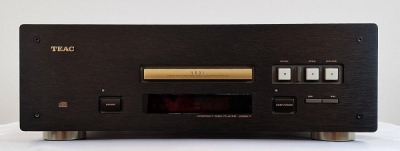 TEAC VRDS T1 Full width Transport. TEAC VRDS 7 Full width Player. 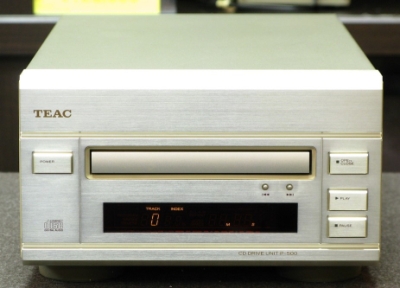 TEAC VRDS 9 Half width Player TEAC P-500 Half width Transport Esoteric P-500 Half width Transport Wadia 6/21/850/861 Players Wadia 8 Transport  TEAC VRDS 8 Full width Player VRDS CMK-3.2 Now this mechanism is a whole different animal and well worth considering. 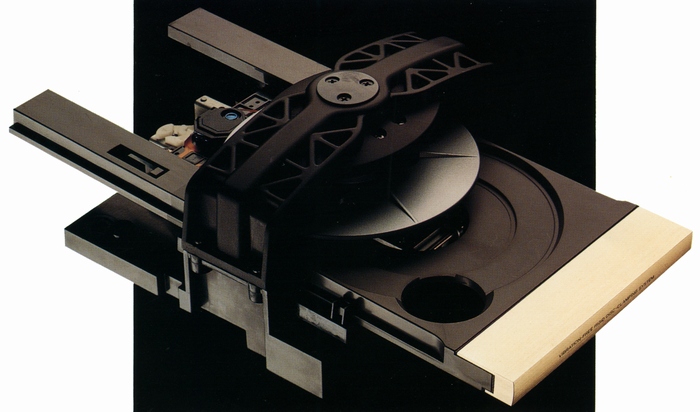 The bridge is a heavily braced rigid plastic molding, which houses decent bearings. The clamping disc is die cast metal. The laser assembly is the well respected Sony KSS-151A. The motor is a brush-less hall effect, as seen below. 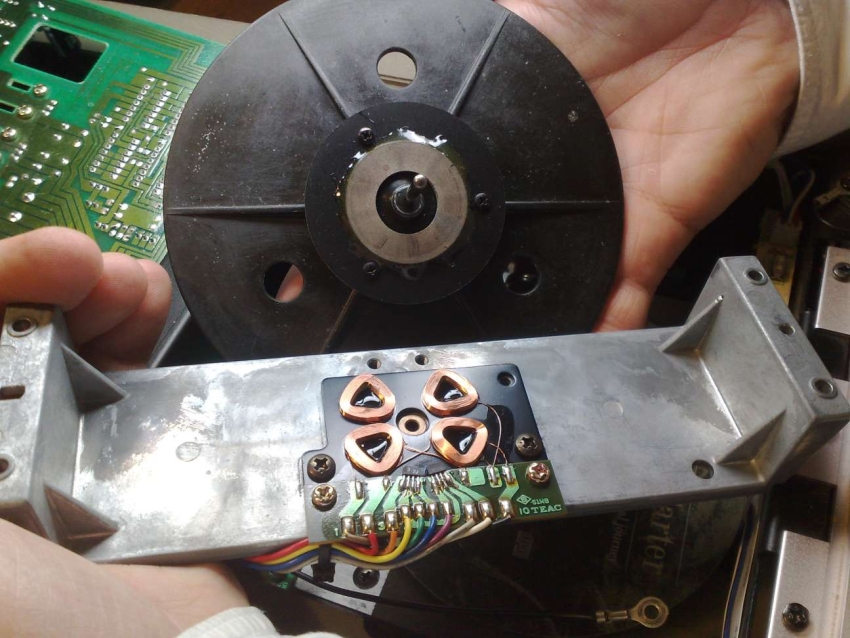 This is the die cast metal bridge off an Esoteric P-2, the motor coil board is mounted on the underside. This motor is identical to and has the same part number, as the one used in the CMK-3.2 rigid plastic bridge. The models that contain CMK-3.2 mechanism and which are worth consideration are: Teak VRDS 10 Full width Player Teak VRDS 10SE Full width Player Teak VRDS 20 Full width Player Teak VRDS 25 Full width Player Esoteric P-30 Full width Transport TEAC P-700 Half width Transport Esoteric P-700 Half width Transport Wadia 16/860 Players Wadia 20/270 Transports Because of the high quality design and engineering that went into the CMK-3.2 VRDS mechanism, any machine using it, could be used as the basis for a very good CD Transport, that would be hard to beat. The fact that the DAC's in these CD Players were on a separate PCB, means they can simply be unplugged and removed, leaving space for better power supplies etc. VRDS CMK-3 There seems to have been a couple of variants under the CMK-3 banner. Both are very well made, all metal construction and highly recommended. These only appear on higher priced models. 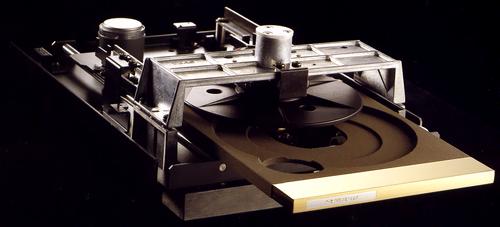 The first uses a die cast metal bridge which is very angular, resembling a ribbed rectangle. Note, the cylinder on top is not a motor, it's the housing for the large bearing. As used on the Esoteric P-2, P-10, X-1, Tascam CD-701, Wadia WT-2000 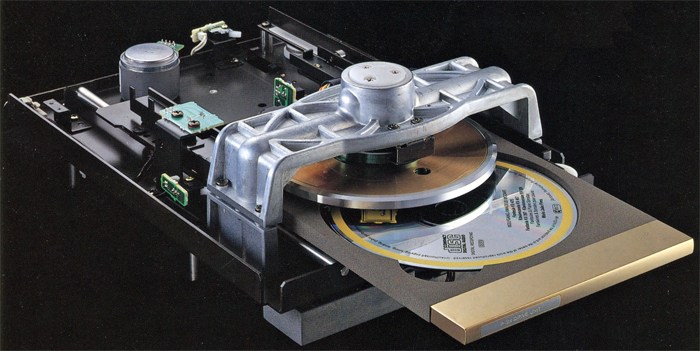 On the second variant, CMK-3s, the die casting is more rounded, with thicker/deeper bracing and looks more like the plastic moulded CMK-3.2 version. It has a thicker/heavier clamping disc made of a Brass/Aluminium sandwich and was only used on a handful of top end models, with an "s" suffix, such as the Esoteric P-2s, X-1s and Wadia WT-2000s Needles to say, anything using one of these versions, is going to be very good in stock form, plus price/rarity will put them beyond most tinkerers anyway. VRDS - NEO (for reference only) This is probably the ultimate in VRDS engineering  Again a couple of variants, all used on more recent and exotic machines. This one on the Esoteric X-01 SACD Payer. 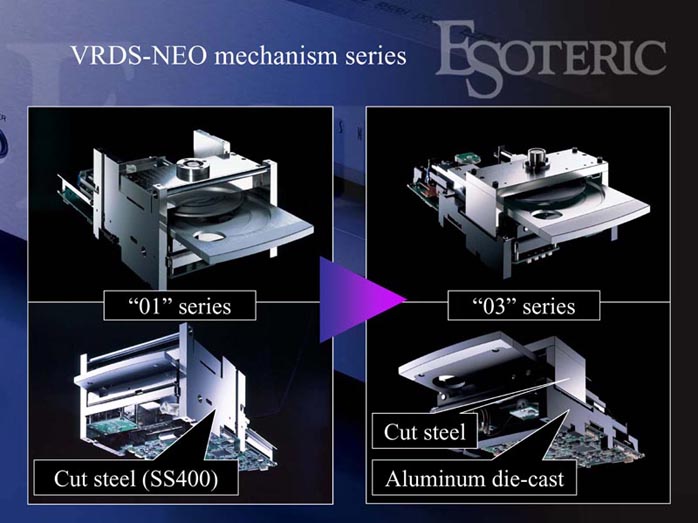 Only used on exceptional and expensive machines, these versions are definitely not for the budget conscious DIYer. VRDS - 701 (for reference only) The current production, re-introduced VRDS mechanism 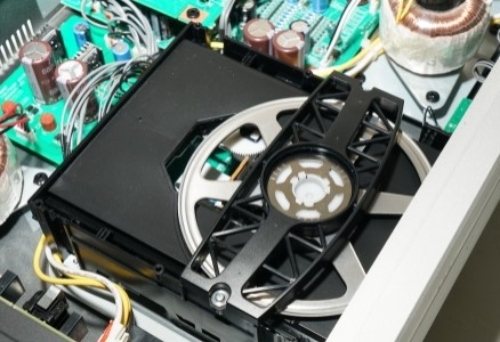 This is the the more sane current production VRDS mechanisms, as used on the £2k TEAC VRDS 701T Transport and £2.5k VRDS 701 Player. If I'm honest, it looks flimsy, a lightweight spoked plastic bridge and cut away metal clamp, with only a single screw per side holding the bridge in place. Sure the electronics are probably better than the old stuff, but I think the CMK-3 (metal) and even the CMK-3.2 (Plastic) bridged versions, look more substantial. With the classic VRDS machines, the further you went up the model range, the chunkier, more rigid the bridge/bearing and clamping disc became. This latest version seems to go against that thinking, maybe built down to a price, or just engineered to the nth degree using computer aided design? Who knows! I prefer the old approach, so wont be rushing out and buying a 701. Instead, I'll keep my eyes peeled for a good used example, using the CMK-3 or CMK-3.2 mechanism. This will become the donor machine for my Transport project. If I'm very lucky, I won't need do any upgrades and an Esoteric P-2 or P-2s will come along, with the correct UK voltage. I wont hold my breath though as I don't think many of these got to Europe. |
 |
 |